Filament vs. pellets in industrial 3D printing: technical criteria for professional and industrial applications
Pellets in Industrial 3D Printing
Industrial 3D printing has been evolving for years, from prototyping to the printing of the final product itself, becoming increasingly integrated into real production processes and advanced research environments. The way materials are processed has gained particular importance and has led to different strategies, such as the use of 3D printing filament or 3D printing with pellets.
At first glance, these may appear to be two opposing approaches, but in practice they respond to different needs within additive manufacturing. While one prioritises control and precision, the other focuses on efficiency and scalability. Understanding these differences is key to getting the most out of each technology.
For engineers and materials researchers, choosing between filament and pellets is not a minor issue. It not only affects the final quality of the part, but also aspects such as material cost, production speed and the possibility of working with new compounds. Therefore, rather than choosing one over the other, the challenge lies in knowing when to use each option and how to combine them within the same workflow.
Process Fundamentals: Filament and Pellet Extrusion
The use of filament is based on a previously extruded and calibrated material, which ensures consistent feeding and high process stability. This characteristic allows precise control of the flow rate, making it easier to produce parts with high surface quality and tight tolerances. For this reason, filament has become the standard in environments where repeatability is critical.
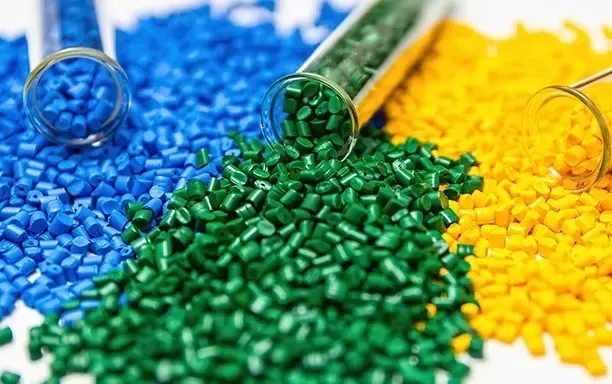
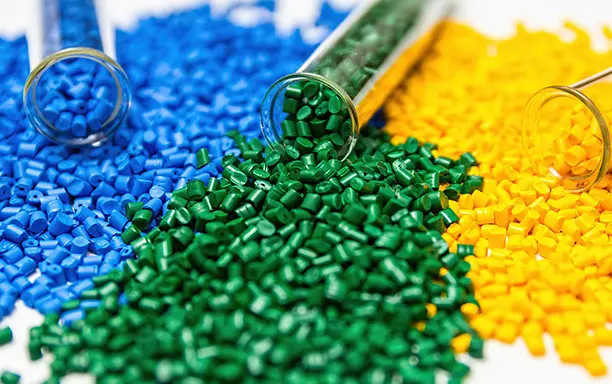
In contrast, 3D printing pellet extrusion works directly with polymer granules, eliminating the need to first transform the material into filament. This approach brings additive manufacturing closer to traditional industrial processes such as injection moulding or extrusion, allowing the direct use of technical materials, recycled materials or experimental formulations. It also enables higher deposition rates, which is key in large-format applications.
Technical Advantages of Filament in 3D Printing
3D printing filament remains the preferred option when a high degree of precision and process control is required. Its homogeneity facilitates stable extrusion, minimising variations that could affect part quality. This results in better surface finishes and greater accuracy when producing complex geometries.
From an operational perspective, filament simplifies setup and reduces variability, which is particularly relevant in design validation environments or during the initial stages of development. In addition, a very wide range of materials is available in this format, including technical polymers and advanced compounds already optimised for printing.
In R&D environments, filament makes it possible to isolate process variables and work with greater precision when optimising parameters, making it a key tool during controlled experimentation phases.
Advantages of 3D Printing with Pellets
3D printing with pellets introduces a different dimension in terms of efficiency and scalability. By using raw material in its original format, material-related costs are significantly reduced, which has a direct impact on industrial applications or projects where polymer consumption is high.
In addition, this approach makes it possible to work with a wider variety of materials, including those that are not available in filament form. This is particularly relevant in the research of new compounds, where the possibility of modifying formulations or directly incorporating fillers opens up new development opportunities.
Another key aspect is the ability to increase productivity. Higher deposition rates make it possible to manufacture large-volume parts in significantly less time, positioning pellets as an ideal solution for the production of tooling, moulds or structural components.
In terms of adoption, sectors such as automotive, aerospace, railway and medicine already use this technology regularly. It is also particularly relevant for material development companies and plastic injection moulding processes, where it makes it possible to validate parts using the same material as the final product, reducing costs and improving accuracy during the design and validation phase.
Filament vs Pellet 3D Printing: Selection Criteria
The debate over filament vs pellet 3D printing should be approached from a strategic perspective. It is not about determining which is better, but rather identifying the context in which each technology provides greater value.
Filament stands out in scenarios where precision, detail and repeatability are critical factors. It is the natural choice for functional prototyping, validation of complex geometries or the production of parts with strict finishing requirements.
Pellets, on the other hand, are more suitable when material cost, production scale or the need to work with specific materials are determining factors. In industrial applications, where volume and efficiency are priorities, this approach offers clear advantages.
In practice, many advanced environments combine both solutions. It is common to use filament during development and validation phases and subsequently move to pellets during production or scaling stages. This transition makes it possible to maintain the quality of the initial design while optimising costs and production times.
TUMAKER: Advanced Solutions in Industrial 3D Printing
At TUMAKER, we work to help organisations efficiently integrate both 3D printing filament and 3D printing with pellets into their additive manufacturing processes.
Our approach is based on developing solutions adapted to industrial and research environments, making it possible to select the most suitable technology at each stage of the process, from material development to large-scale production. We are committed to an integrated approach that facilitates the transition between technologies and maximises the overall performance of each application.
If you are exploring how to optimise your industrial 3D printing processes or need technical advice on pellet extrusion for 3D printing and filament, we will be happy to analyse your case and help you define the best implementation strategy.