Pellet 3D Printing and the Circular Economy
Pellet 3D Printing and the Circular Economy
The circular economy is a key requirement for achieving the objectives of the Recovery Plan for Europe. A production process based on respect for the environment through the reuse of existing resources and generated waste. Expanding the circular economy to means of production at all levels will drive an economic transformation characterised by a green transition that will lead Europe to become a global leader.
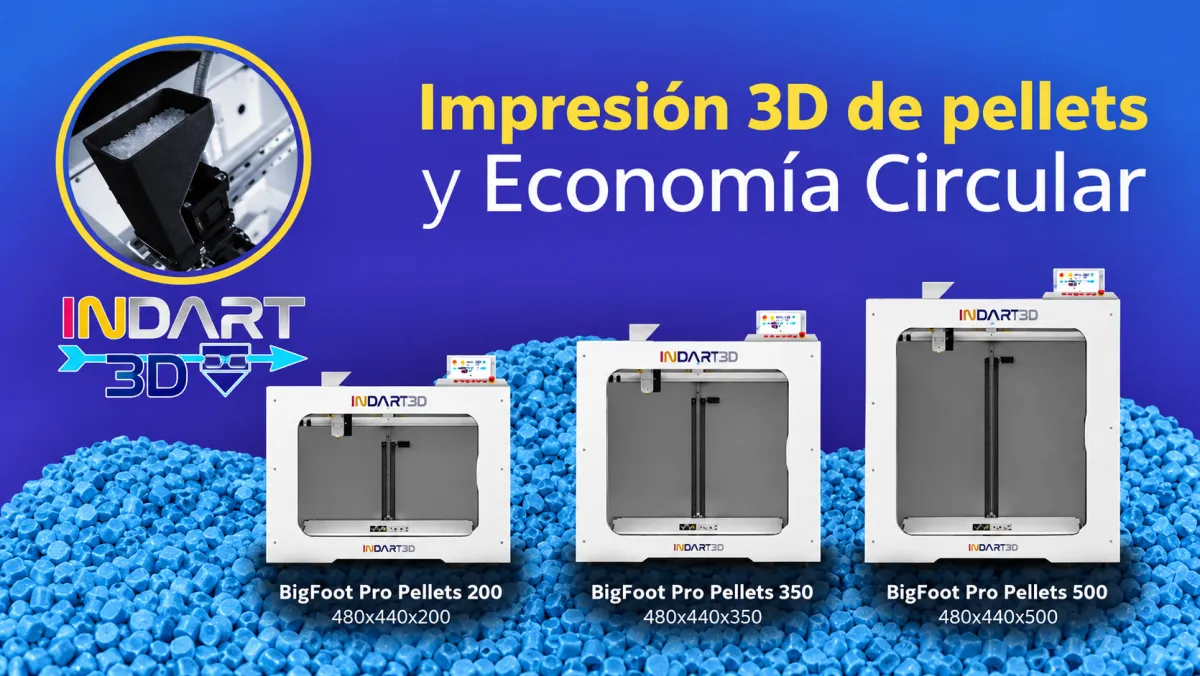
The range of TUMAKER pellet 3D printers addresses one of the central problems in the economy: the scarcity of resources in the face of unlimited needs. We present our machines as a tool for implementing the circular economy project and tackling the depletion of scarce natural resources.
Green Transformation of the Economy
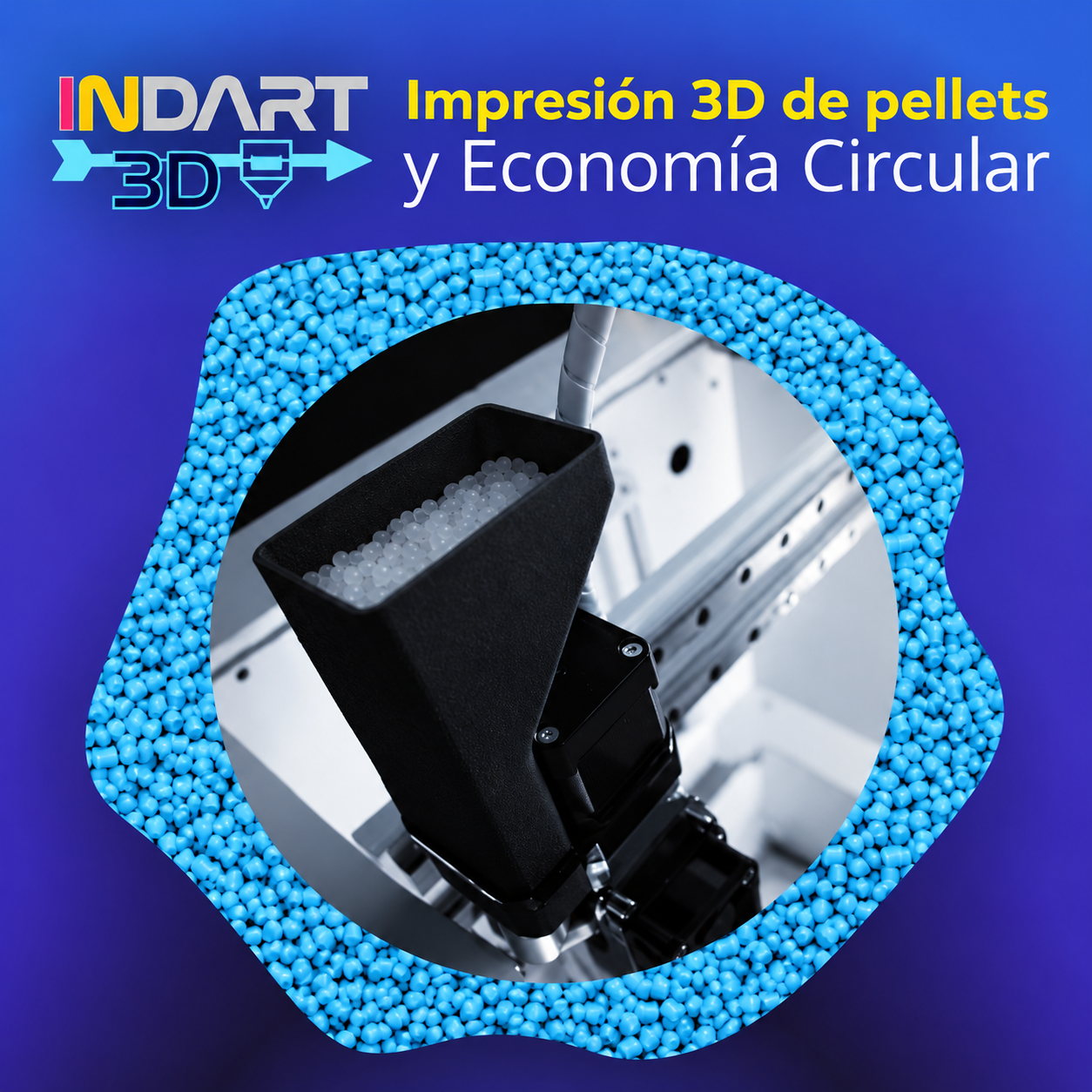
Our range of TUMAKER pellet 3D printers offers users a unique opportunity: self-sufficiency. Machine users can develop their own reusable and 100% environmentally friendly raw materials.
What types of products or means of production can this revolutionary method be applied to? How can the viability of implementing this project be guaranteed? We highlight applications that have already demonstrated the advantages of entering a new era. An era characterised by transformation, digitalisation, conservation of natural resources and long-term sustainability.
New products with greater added and environmental value are created from plastic waste. Products that overcome the technological barriers seen until now. Materials obtained entirely from recycled products. Waste that once polluted now promotes development.
The various applications of this additive manufacturing process are aimed at all levels: educational institutions, construction, household products or any customised object desired by the user.
Innovative Applications of 3D Printers
In 2016, the concept of Print Your City was presented for the first time in Amsterdam. This project, later launched in Greece, demonstrates the relationship between ecology and the use of 3D machines.
The idea behind this project, led by The New Raw, was to create urban furniture from plastic waste. To this end, several 50-kilogram benches were printed using waste generated by local residents.
In this way, modern technology makes use of a new material, plastic wood, resulting in an innovative product with greater added value due to the increased resistance this material offers against external factors (water, temperature, etc.).
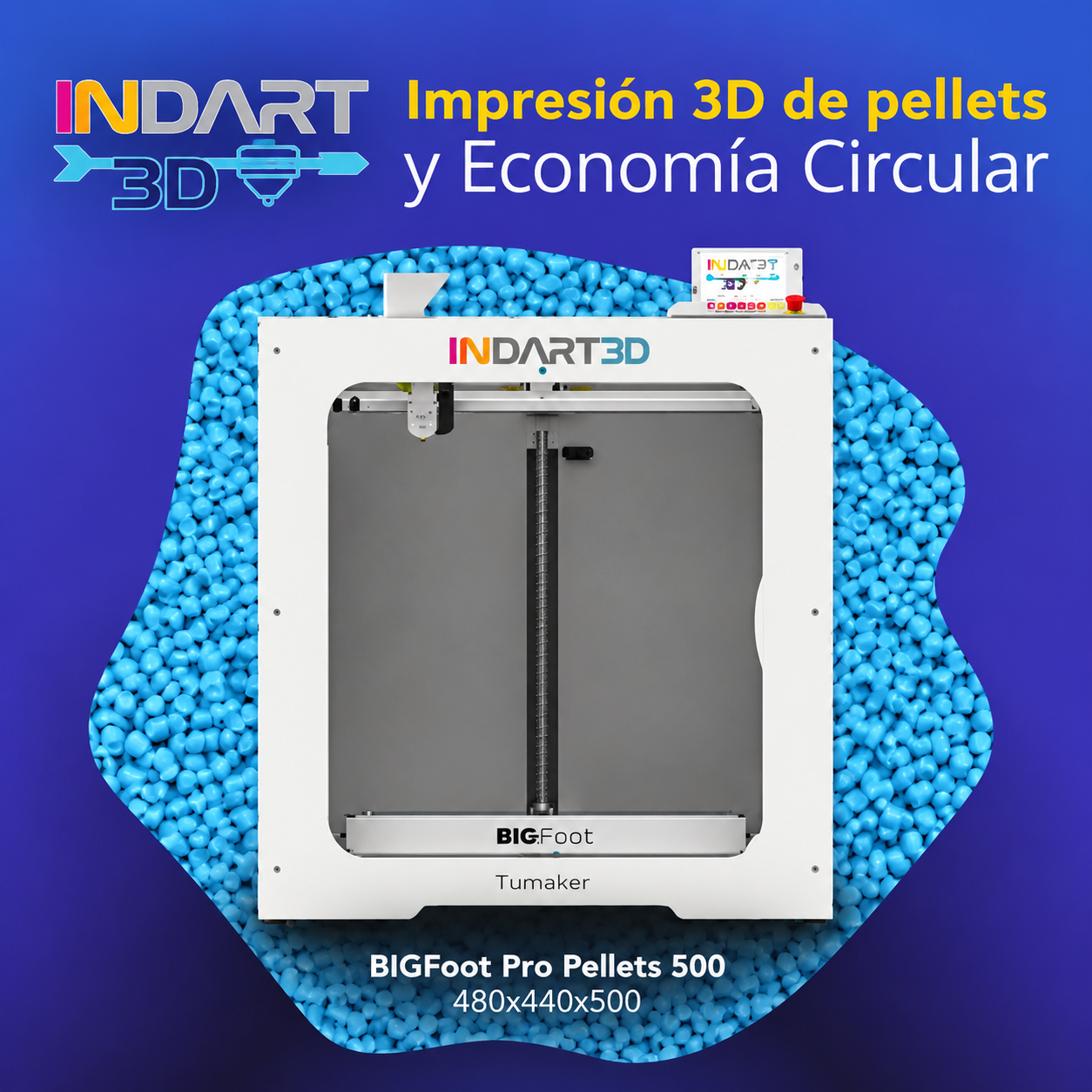
With our TUMAKER Pro Pellets 3D printer, we offer you the opportunity to be among the first to reach new sectors. You will be able to discover new applications with the same success as the one mentioned above.
This is a distinctive form of 3D printing with unique characteristics. A technology capable of tackling one of the greatest threats affecting our ecosystem: the increase in plastic waste.
The use of pellet 3D printers makes it possible to carry out all possible applications of recycled plastic. Potential sectors such as agriculture and the automotive industry are major consumers of this type of raw material. Ford alone claims to use more than one million recycled plastic bottles every year in the manufacture of its cars.
Pellet 3D Printing: Giving New Life to the Traditional Economy
Certain ecological habitats are at risk of extinction. Until now, this seemed to be a threat that we were unable to address without having to give up certain privileges. However, giving up the production of certain goods and services would result in major losses for companies and high opportunity costs for consumers.
Numerous scientists are conducting research into introducing objects created through 3D printing as substitutes for endangered natural resources into the environment. This appears to be an effective approach to compensating for the degradation of ecosystems caused over recent decades.
By combining biodegradable-based plastics with natural elements, we can obtain innovative natural materials. For example, combining algae waste and plant fibres allows us to obtain materials that can give new life to the rural economy.
Materials that were once essential and have been overlooked as a result of technological advances can be brought back to life. Pellets made from plant fibres such as flax, hemp, esparto grass… can restore the value of traditional crops. A measure that undoubtedly strengthens the protection of biodiversity in our environment.
New Applications of 3D Printers
Another example can be found in a 3D-printed coral that proved highly successful in response to the devastating destruction of coral reefs. In this case, 3D printing provided invaluable added value, equivalent to the survival of several species of ocean life.
Projects of this type require specific materials that are not available in filament form. Materials that, with our Pellet 3D Printer, we could use directly in granule form.
These applications raise great expectations for the future. This comprehensive transformation will have a global impact on the ecological system in the near future, and it is up to us to implement it as soon as possible, maximising performance while minimising its repercussions.