Materials for FDM 3D Printing: ABS, PEKK, Ultem, …
Materials for FDM 3D Printing: ABS, PEKK, Ultem, …
Since its emergence several years ago, 3D printing has been in a constant pursuit of new materials. The objective is clear. The more materials that can be 3D printed, the more industries will be able to implement the use of 3D printers.
Emergence of New Materials for 3D Printers
In recent years, new materials optimised for use in 3D printing have been developed. This led to the emergence of PLA-based materials with components that imitated wood (WOOD), copper, bronze, … These materials did not provide professional benefits to 3D prints, but they produced different and highly sought-after finishes.
TPU brought about a major change in the way 3D printing was conceived. A flexible material that made it possible to reach industries such as fashion, sports, mechanics, … The limitations were determined by the SHORE A hardness that filament 3D printers could achieve due to the technology itself. In this regard, the CoLiDo X3045, with its large printing size, is perfectly suited to these materials.
PA (Nylon), PC (Polycarbonate), ASA, HiPS and PET-G took 3D printing to another level. Advanced technical filaments that provide advanced technical characteristics. Materials that have led 3D printing to be considered a comprehensive production system. However, the use of these 3D filaments requires more professional and reliable 3D printers. Examples of this type of equipment include the Tumaker NX Pro and the Tumaker NX Pro Dual, which can use filament spools of up to 8 kg.
Advanced Technical Materials for 3D Printers
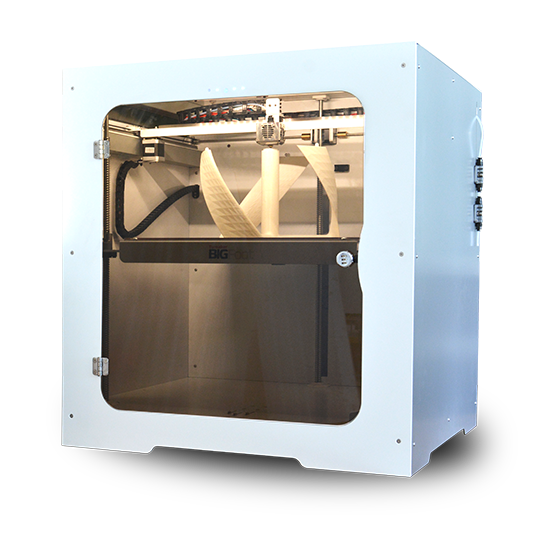
In the search for new materials for 3D printing, one of the most widely used approaches has been the development of composite materials. Materials reinforced with glass fibre, carbon fibre, mineral fillers, … These ultra-resistant materials, with thermal, flame-retardant or chemical properties, are often difficult to print and require abrasion-resistant nozzles. The need for professional 3D printers for their use is becoming increasingly evident. Printers that can incorporate abrasion-resistant all-metal nozzles. The Tumaker BigFoot Series is a clear example of professional 3D printers.
During this time, the use of advanced materials such as ULTEM and PEKK has also intensified. These materials, together with those based on polypropylene, are bringing 3D printing closer to its goal of professional use.
Limitations in the Development of New Materials for 3D Printing
As we can see, the evolution in the use of materials for 3D printing has been constant. However, the development of new materials faces the challenge of the associated economic cost and the need to optimise the material. This optimisation is necessary to ensure its performance in 3D printing.
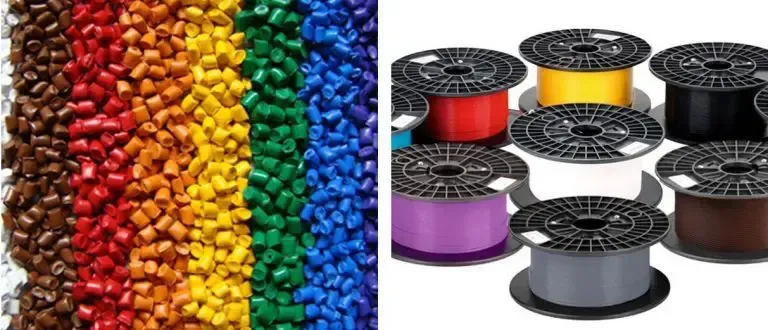
In the material optimisation process, several prior transformations are required. First, the base material itself must be obtained. This involves costly research and development, but it is absolutely essential. Once the material has been obtained, usually in pellet or granule form, it needs to be transformed. It needs to be converted into filament. This first transformation already causes changes in the chemical and physical properties of the material. Once the filament has been obtained, its performance in a 3D printer must be tested. If its performance is not adequate, it is necessary to return to the beginning and make the appropriate modifications to the composition of the base material. This process is repeated until the final product is an efficient filament that can be 3D printed.
Freedom to Choose Materials for 3D Printing
Now, at last, we have reached a truly disruptive change in the use of materials in 3D printing. A technological transformation that makes it possible to use materials that were previously unimaginable.
FDM 3D printers operate with filament. Therefore, materials are limited to those available in filament form. For this reason, TUMAKER has developed the Pellet 3D Printer. A machine capable of 3D printing directly with granules. A 3D printer that breaks down the limitations on the use of materials.
With the Tumaker NX Pro Pellet 3D Printer and the Tumaker BIGFoot Pro Pellets, users can use their own injection moulding materials. Companies can 3D print using certified or approved materials. Material developers can speed up the process by eliminating the need to transform the original pellets into filament before testing them in 3D printers.
Pellet 3D Printer: The New Frontier in 3D Printing
Thanks to this 3D printer, we can work with materials that would be unthinkable in filament form. Technical materials such as ABS+CF, PA12+Ferrite, PA12+Neodymium, PP+Mineral Filler, HDPE, PC 766M, PA66, Catamold, Grilon BK.30, VALOX Resin 357X, PPC 7712, PEKK, Ultem…
Thanks to this 3D printer and its pellet 3D printing technology, we can safely work with polymers containing ferrous fillers, mineral fillers, fibre reinforcement, … True freedom in the choice of materials.