The University of Vigo Is Already Experiencing the Versatility Offered by TUMAKER Pellet 3D Printing
The University of Vigo Is Already Experiencing the Versatility Offered by TUMAKER Pellet 3D Printing
The exponential growth that 3D printing has experienced in recent years has not gone unnoticed. More and more educational institutions, companies, technological research organisations, hospitals and institutions of all kinds are looking to improve their performance by incorporating this innovative technology. The possibilities offered by 3D printing are making it an increasingly established pillar across a wide range of sectors. Furthermore, it is a constantly evolving creation process aimed at meeting the specific needs of each one.
One example of this is the introduction of pellet 3D printing to the market. This technology puts an end to the inherent limitations of filament printing. With a pellet 3D printer, it is possible to achieve more efficient manufacturing, greater productivity and significant cost reductions. The possibility of working with all those materials that are not available in filament form opens up endless possibilities.
Applications of Pellet 3D Printing in the New Materials Group (FA3)
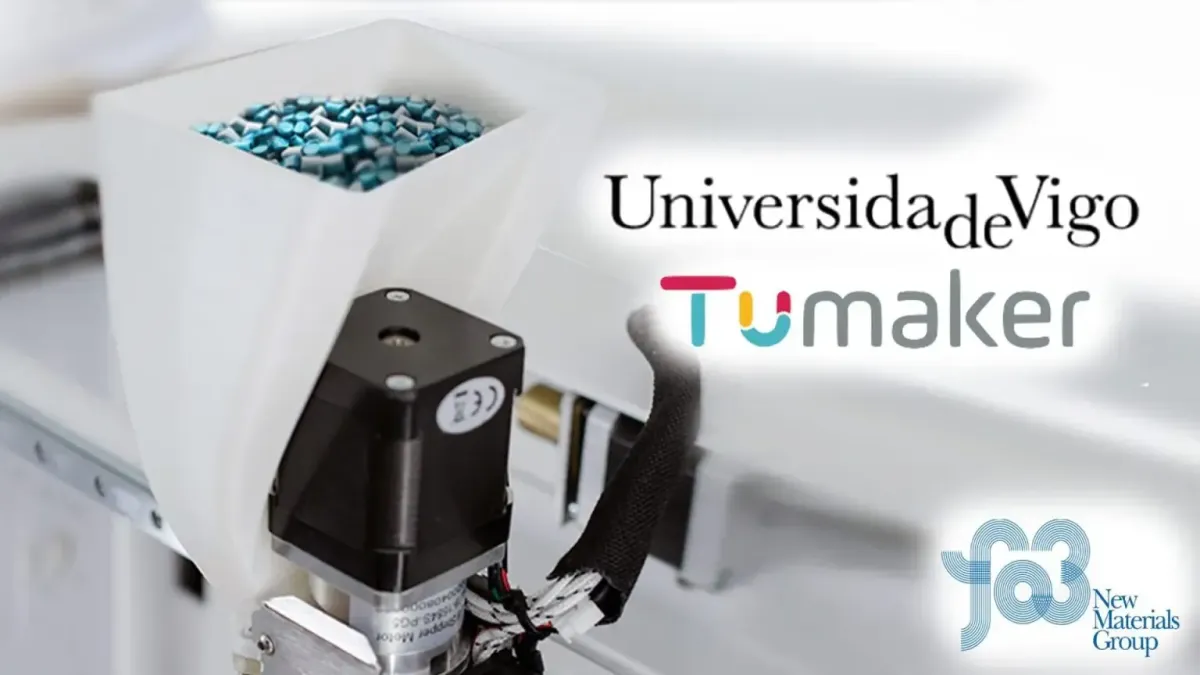
All these advantages are already being experienced by the University of Vigo (UVIGO) through the New Materials Group (FA3), which belongs to the School of Industrial Engineering (EII) and is affiliated with the Research Centre for Technologies, Energy and Industrial Processes (CINTECX). UVIGO’s New Materials Group is an interdisciplinary group with extensive experience in the development and processing of new materials.
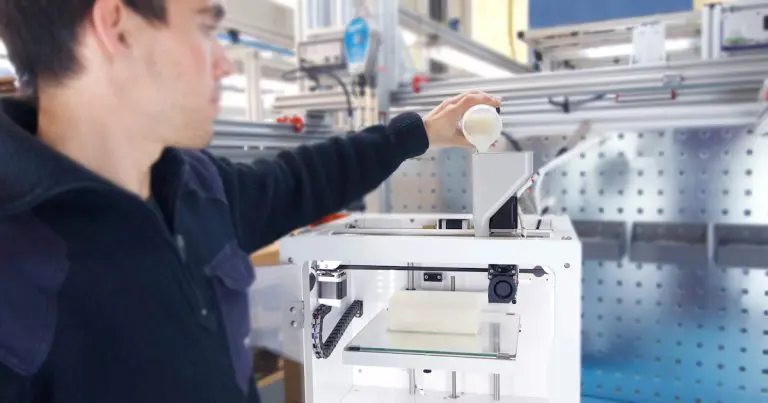
The FA3 group has several lines of research, including one focused on biomedical engineering. In this field, for more than a year, the group has been using a TUMAKER NX Pro Pellet 3D printer, which has become one of its regular tools.
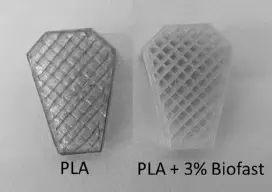
As the researchers from the FA3 group (Pío González Fernández, Julia Serra Rodríguez, Stefano Chiussi, Sara Pérez Davila, Laura González Rodríguez, Pablo Barreiro Castro) explain, they are using this new printer to carry out developments focused on the manufacture of scaffolds and biocompatible devices for applications in tissue engineering. To do this, they mix polylactic acid (PLA) pellets with calcium phosphate (CaP) powder in different proportions for 3D printing. One of the specific applications being addressed is the development of 3D scaffolds that can serve as matrices for bone tissue regeneration. The TUMAKER NX Pro Pellet is also being used to produce prosthetic and orthotic devices for veterinary applications. The versatility of this technology will make it possible to undertake future work within this line of research, including the possibility of progressively incorporating nanomaterials and pharmaceuticals into the printing process.
Combining calcium phosphate (CaP) granules with a synthetic polymer base material (PLA) to obtain a pellet for direct printing is only possible with TUMAKER technology. The FA3 research group highlights the advantages offered by the TUMAKER NX Pro Pellet printer, including the possibility of combining different materials (polymers and ceramics) in the desired proportions, thereby avoiding the composition limitations of commercial filaments.
TUMAKER Is Committed to Research
The development of new and innovative methods that facilitate work across different sectors has always been a priority for us. The fact that institutions as prominent as the University of Vigo are putting techniques and products enhanced by TUMAKER into practice means that things are being done well.
It is everyone’s responsibility to find common goals in order to continue driving sectors such as research forward. The commitment to providing research groups such as New Materials (FA3 UVIGO-CINTECX) with the most cutting-edge 3D printing technology on the market promotes mutual growth.
At TUMAKER, we would like to thank them for the trust they have placed in our approach to 3D technology. Seeing the improvements brought about by 3D printing, in this case pellet 3D printing, makes the effort worthwhile.
Ultimately, the TUMAKER NX Pro Pellet printer used by the University of Vigo represents a major advancement, but innovation does not end there. We have recently introduced the TUMAKER Pro Dual. A 3D printer that takes the range of applications to the next level thanks to its two independent and customisable print heads. A technology that allows us to combine up to three different print head types, depending on the intended use of the machine.
Discover all the latest developments in the 3D world at: www.tumaker.com.